Have you ever noticed how lottery jackpots today feel… unreal? You see numbers like $200 million, €300 million, or even higher, and you think, “Wow, maybe this time it’s me!” But then, nobody wins. Again. That’s the magic—and a little trick—of rollovers.
In modern lotteries, when nobody guesses all the numbers, the jackpot doesn’t vanish. Instead, it moves to the next draw and grows. Bigger prizes grab attention, make headlines, and get everyone dreaming. But here’s the truth: a bigger jackpot doesn’t mean better odds. Your chance of winning remains tiny, even if the prize looks like it could buy you a private island.
What Is a Lottery Rollover?
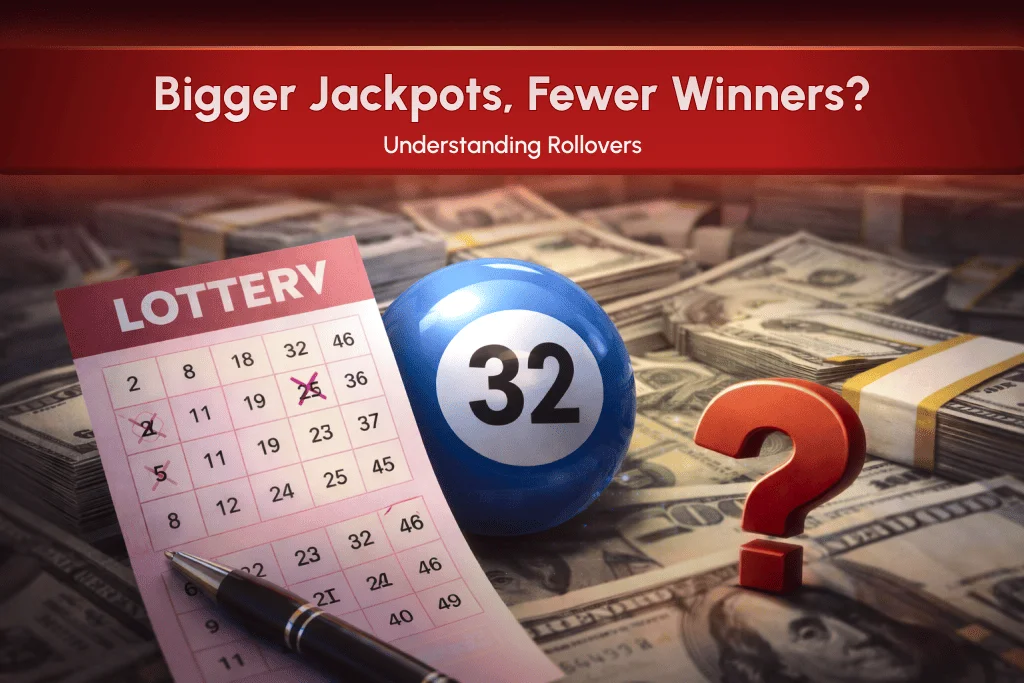
A lottery rollover happens when nobody wins the jackpot, and the prize gets added to the next drawing. It’s one of the main reasons why jackpots today can become absolutely enormous. Rollovers turn ordinary draws into headline-making events. Many players chase the growing prize, even though the chance of winning stays the same.
How Rollovers Work in Lottery Systems
Here’s the basics: you buy a lotto ticket and pick your lotto numbers. If no one matches all the numbers, the jackpot doesn’t disappear—it rolls over. The next draw combines the previous prize with the money from new ticket sales.
Imagine the jackpot is $50 million. Nobody wins. Next week, it grows to $70 million. Still no winner? Now $100 million. Each rollover adds excitement, and each rollover adds more media buzz. But, spoiler alert: your actual chance of winning doesn’t increase one bit. It’s like watching your cake grow in the oven but knowing you still don’t get to eat it.
Why Rollovers Lead to Massive Jackpots
A few rollovers in a row can create jaw-dropping prizes. That’s how we get headlines about lotto jackpot today reaching hundreds of millions. And it’s not just hype—the lotto prize breakdown shows how much of the jackpot comes from previous draws versus new ticket sales. Rollovers are the reason some lotteries feel like a money snowball—each draw adds a new layer, until the prize becomes impossible to ignore.
Why Big Jackpots Often Mean Fewer Winners
It might seem logical: bigger jackpot = higher chance? Nope. Bigger prizes often mean even fewer winners. That’s because lotteries often change game rules to make winning harder. More numbers, more combinations, and more rollovers make it increasingly unlikely that a player will hit the jackpot.
Changes in Lottery Odds and Game Design
Many lotteries make winning harder on purpose. They add more numbers to pick from, making the pool of possible combinations enormous. That’s why your lotto numbers tonight are less likely to match. Even if the lotto result today shows a record jackpot, your odds haven’t improved. Rollovers happen more often because the games are designed to make matching every number extremely difficult. It’s like adding extra locks to a treasure chest that only the lucky few can open.
Probability and the Reality of Winning
Let’s be honest: the math is ruthless. Look at lotto results UK or the lotto results prize breakdown, and the odds are still mind-bogglingly low. You could play every week for years, and the jackpot might never be yours. That’s why some jackpots grow for months, creating the illusion that winning is “almost possible,” when in reality, it’s almost impossible. Sometimes, the bigger the jackpot, the lonelier the winners.
Why Lotteries Encourage Rollovers
Lotteries love rollovers because they create buzz, excitement, and ticket sales. Every new record-breaking jackpot brings attention from the media and draws in players who might not normally play. Rollovers turn small draws into major events, and the bigger the prize, the more people join in the hope of hitting it big. Essentially, rollovers are marketing dressed up as math.
Marketing Power of Huge Jackpots
Bigger prizes grab headlines, social media, and water-cooler chatter. They make people rush to buy tickets. For example, EuroMillions and the Euro Millions draw time suddenly feel like a national celebration. Rollovers are a lottery’s secret marketing weapon: the bigger the prize, the more eyes on the game—and more wallets open.
Player Psychology and the “Jackpot Effect”
When the jackpot climbs, our brains go into overdrive. Even if your odds haven’t changed, a giant number makes buying a ticket irresistible. People check when is EuroMillions draw and constantly check my EuroMillions results, hoping luck will finally strike. This is the “Jackpot Effect”—psychology turning tiny chances into massive excitement.
Real-World Examples of Rollover Jackpots
Rollovers aren’t just theory—they happen all the time in lotto live and lotto online games. Seeing real-life examples helps understand how jackpots can grow to insane amounts. It also shows how player behavior changes when prizes become huge. Rollover jackpots are a mix of math, marketing, and psychology, all working together to keep lotteries interesting.
Record Lottery Rollovers and Billion-Dollar Prizes
Take the National Lottery in the UK or The National Lottery in the US. Some jackpots only got this big after multiple rollovers. Record-breaking prizes make headlines and inspire everyone to imagine themselves as the next big winner. It’s like a snowball, but made of money—each draw adds layers until the jackpot becomes legendary.
When Rollovers Trigger Ticket-Buying Frenzies
Big jackpots cause frenzies. The National Lottery website can get slammed with traffic, and suddenly everyone asks, “Can you buy lottery tickets online?” People spend hours picking numbers, even though the odds haven’t improved. Rollovers turn ordinary draws into near-global events, where everyone suddenly thinks they have a “real shot.”
Do Rollovers Change Your Chances of Winning?
Many players think that as the jackpot grows, their chance of winning improves. But that’s a myth. The odds remain extremely small no matter how massive the prize becomes. Rollovers only increase the prize size, not the probability. Using tools like lotto ticket checker shows the math doesn’t lie.
Why Bigger Jackpots Don’t Improve Odds
Even if you look at the National Lottery EuroMillions results, the odds remain the same. Rollovers increase the prize, not your probability. That’s the key fact that every player should remember before spending $20 on tickets. Bigger jackpots are exciting—but they’re not magical.
Expected Value vs Realistic Winning Chances
Big jackpots can raise the expected value of a ticket, but don’t fool yourself. The chance of winning is still extremely small. Check lotto unclaimed prizes or state lotteries like co Lottery, and you’ll see that many massive jackpots go unclaimed simply because nobody beats the odds. Rollovers create excitement, not guaranteed money.
Strategies and Tips for Lottery Players
Even if your odds are low, there are ways to play smarter. Choosing games carefully and understanding prize distribution can make your lottery experience more enjoyable and less frustrating. Playing for fun, not just money, is always a good approach when chasing rollovers.
Choosing Games with Better Odds
Some lotteries have fewer numbers or simpler rules. Focus on lotto numbers and check lotto results before deciding where to play. Sometimes smaller jackpots actually offer better odds than enormous rollovers. Remember: a smaller, realistic jackpot is better than dreaming of a billion-dollar fantasy you’ll likely never touch.
Understanding Prize Distribution and Shared Jackpots
Big wins can mean sharing. Even if you hit the lotto jackpot today, the lotto prize breakdown may show that the prize is divided among multiple winners. Rollovers attract more players, which often means the pot is split. Knowing this can save heartbreak—and help you play smarter.
FAQ: Lottery Rollovers and Jackpot Odds
What is a rollover in lottery games?
When no one wins, the jackpot rolls over to the next draw.
Why do lottery jackpots keep increasing after each draw?
Because rollovers add previous prizes to new ticket sales.
Do rollovers improve your chances of winning the jackpot?
No, your odds stay the same even if the jackpot grows.
Why do lotteries design games with very large jackpots?
To attract media attention and increase ticket sales.
How many rollovers can occur before a jackpot is won?
It can be many—sometimes months of draws.
Can multiple players share a rollover jackpot?
Yes, large jackpots are often split among several winners.
Are rollover jackpots better value for players?
Mathematically, not really. Odds remain extremely low even if prizes grow.
So, rollovers make lotteries exciting, but they’re not magic wands. Big jackpots are thrilling to watch, and dreaming about winning is fun—but always remember the odds. Play for the excitement, enjoy the game, and don’t let huge numbers fool you into thinking a win is guaranteed.
Think of rollovers as the lottery’s way of making life more dramatic, like a reality TV show—but with numbers. Have fun picking your lotto numbers, maybe check lotto results tonight, and if nothing else… enjoy the dream. Because sometimes, the joy is in playing, not winning.