
If you follow sports betting news, you probably noticed something interesting during live matches. Odds are constantly moving, and not always only because of what is happening on the field. Sometimes the change feels too fast, too sharp, almost like something else is behind it.
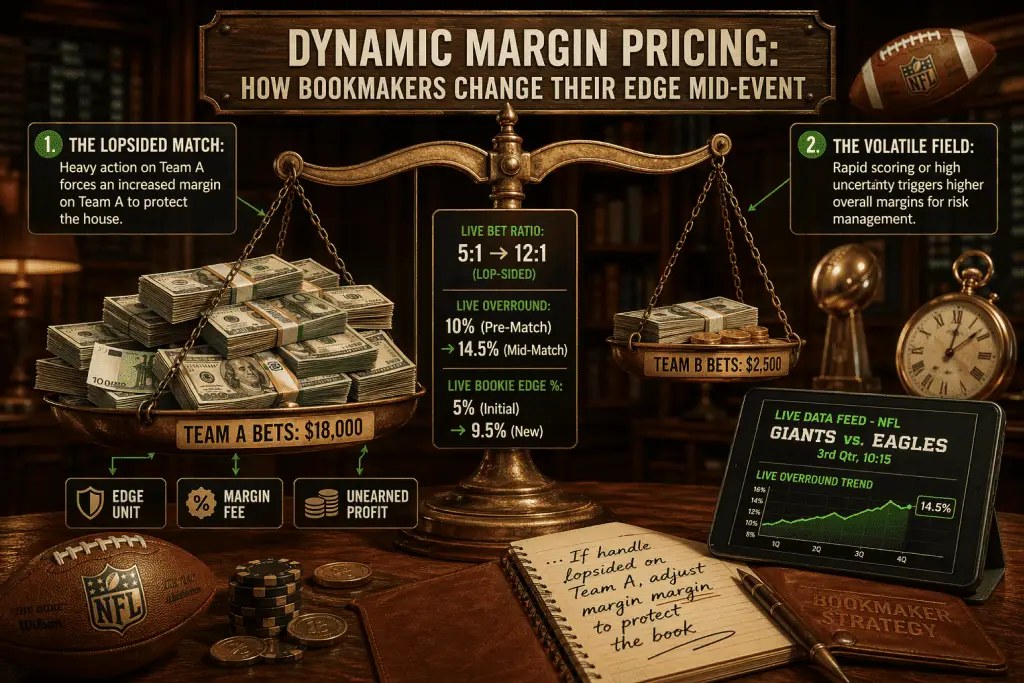
And yes — there is something else. Modern betting platforms are not just reacting to goals, fouls, or momentum. They are also adjusting their own built-in advantage, also known as margin, in real time.
This means that two identical situations in a match can have slightly different odds depending on timing, betting volume, and even player behavior. Understanding this hidden layer is key if you want to make smarter decisions in live betting.
Understanding Dynamic Margin Pricing
To understand how bookmakers change their edge, we first need to break down how odds actually work. It is not only about probability — it is also about how operators secure profit.
Once you see how margin is built into the system, dynamic pricing becomes much easier to understand.
What Is Margin and How Does It Work in Betting?
Every bookmaker includes a margin inside their betting odds. This is the built-in advantage that guarantees profit over time, regardless of the outcome.
In simple terms, if you convert sports betting odds into probabilities, you will notice that the total usually exceeds 100%. That extra percentage is the bookmaker’s margin, also known as the overround.
Across different betting lines on an online sportsbook, this margin can vary. Some markets are more competitive and have lower margins, while others include a higher edge for the operator.
From Static to Dynamic: The Evolution of Pricing Models
In the past, margins were relatively fixed. Bookmakers would set odds before the event and adjust them occasionally based on major changes.
But modern live betting has changed everything. Today, pricing models are dynamic and constantly evolving.
On the best betting sites, algorithms now adjust both odds and margin in real time. These systems react not only to game events but also to betting activity and market conditions, creating a much more fluid environment.
Why Bookmakers Use Dynamic Margins
Dynamic margin pricing is not random. It serves a very clear purpose — to manage risk and maximize profit in a fast-moving environment.
This section explains why bookmakers rely on this approach.
Risk Management and Exposure Control
When a large number of bets comes in on one outcome, bookmakers face increased risk. To balance this, they may adjust betting odds and increase margin in specific markets.
In online betting, this helps operators control exposure and reduce potential losses. If a market becomes too “hot,” the system reacts quickly.
This also protects against arbitrage opportunities, where players try to exploit differences between bookmakers.
Maximizing Profit Through Market Signals
Bookmakers closely monitor how players behave. They analyze patterns, timing, and bet sizes to understand market sentiment.
In football betting, for example, sudden spikes in activity can trigger adjustments. Even if nothing changes on the field, odds may shift based on betting pressure.
Combined with data and betting tips trends, this allows operators to fine-tune margins and maximize profitability across different scenarios.
How Dynamic Pricing Works in Practice
Dynamic pricing is powered by technology. Behind every odds change, there is a system processing huge amounts of data in real time.
This section explains what actually happens behind the scenes.
Algorithmic Adjustments and Real-Time Data Feeds
Modern online sportsbook platforms rely on advanced algorithms connected to live data feeds. These systems track everything — game events, betting volume, and market movement.
As sports betting odds update, the system recalculates probabilities and adjusts margins accordingly. This can happen in milliseconds.
The result is a constantly shifting market where odds reflect both the game and the behavior of bettors.
Event Triggers: Goals, Cards, Injuries and Market Reactions
Certain events act as triggers for immediate changes. A goal, red card, or injury can cause a rapid shift in football odds.
These moments also affect betting lines, often creating temporary inefficiencies. During in-play betting, the margin may increase briefly due to uncertainty and volatility.
This is why odds can feel less “fair” right after a major event. The system is adjusting not just probability, but also risk.
Impact on Bettors and Betting Value
For players, dynamic margin pricing changes how value is found. It is no longer enough to simply predict outcomes — timing becomes just as important.
Understanding margin behavior can make a big difference in long-term results.
Recognizing When Margins Expand or Contract
One of the most useful skills is recognizing when margin changes. This is not always obvious, but it can be observed by comparing odds across different betting sites.
When odds are significantly lower than average, it often indicates a higher margin. Insights from betting industry news suggest that these shifts happen more often during high volatility.
Tracking these patterns helps players avoid poor-value bets.
The Challenge of Finding Value in Live Markets
In live markets, everything moves fast. Betting odds can change within seconds, leaving little time for analysis.
With live betting, players must process information quickly while also considering margin adjustments. This adds complexity and increases the risk of mistakes.
Finding value is still possible, but it requires more awareness and better timing than before.
Operator Strategies and Competitive Dynamics
Bookmakers are competing not only on odds, but also on transparency and user experience. Some platforms try to stand out by offering clearer pricing models.
This section explores how operators position themselves in this environment.
Differentiation Through Pricing Transparency
Some of the best betting sites focus on transparency as a competitive advantage. They provide clearer explanations of how odds are calculated and how margin works.
Platforms like coral betting have experimented with educational tools to help users understand pricing.
This approach builds trust and attracts more informed players who value clarity over complexity.
Balancing Competitiveness with Profitability
Bookmakers must find a balance. If the margin is too high, players will leave. If it is too low, profitability suffers.
According to sports betting news and online betting news, dynamic pricing allows operators to adjust this balance in real time.
This flexibility is what makes modern sportsbooks so effective in competitive markets.
Regulatory and Ethical Considerations
As pricing becomes more complex, regulators are paying closer attention. Transparency and fairness are becoming central topics in the industry.
This section looks at how regulation is evolving.
Transparency Requirements and Consumer Protection
Regulators are starting to require more transparency around pricing. In betting regulation news, there is growing focus on how margins are communicated.
In regions covered by uk betting news, operators may need to provide clearer explanations of odds and risk.
The goal is to protect players from misleading practices and ensure fair conditions.
Fair Play and Market Integrity Concerns
There are also concerns about fairness. If margins change too aggressively, players may feel disadvantaged.
Reports in betting news today highlight the importance of trust in sports betting markets.
To maintain integrity, some experts suggest independent audits of pricing algorithms and clearer disclosure policies.
Strategies for Bettors in a Dynamic Pricing Environment
Even in a complex system, players can adapt. Understanding how dynamic margins work gives you an advantage.
This section provides practical strategies.
Comparing Odds Across Multiple Platforms
One of the simplest strategies is comparison. Checking sports betting odds across multiple platforms helps identify better value.
Different bookmakers apply different margins, even for the same event. By comparing, players can avoid overpaying.
This method remains one of the most effective tools in modern betting.
Timing Your Bets: When Margins May Be Lower
Timing is critical. Margins tend to be lower during stable periods and higher during moments of uncertainty.
In football betting, placing bets before major events or after markets stabilize can improve value. Watching betting lines over time helps identify these patterns.
Patience and observation often lead to better opportunities.
Future Outlook for Betting Pricing Models
Dynamic pricing is still evolving. New technologies and regulatory changes will shape how it develops in the coming years.
This section explores what the future may look like.
AI, Personalization and Adaptive Margins
Artificial intelligence is already influencing pricing models. In the future, margins may become personalized.
According to betting industry news and sports betting news updates, platforms could adjust odds based on individual behavior.
This would create a highly customized experience, but also raise new questions about fairness.
Regulatory Evolution and Standardization Efforts
Regulators may respond by introducing new standards. Discussions in betting regulation news, uk betting news, and betting news today suggest a push for more transparency.
Standardized rules could help ensure fair treatment across platforms.
However, balancing innovation and regulation will remain a challenge.
At last, dynamic pricing is not something you see directly, but it affects every bet you place.
And once you understand how it works, you start seeing the game behind the game.
FAQ: Dynamic Margin Pricing and Live Betting
What is dynamic margin pricing in sports betting?
It is when bookmakers adjust their margin in real time during events.
How do bookmakers change their edge mid-event?
Through algorithms reacting to bets and game events.
Can I tell when margin increases?
Yes, by comparing odds across platforms.
Does this affect my chances?
It affects value, not probability.
Are some sites more transparent?
Yes, some platforms provide clearer pricing.
How can I find value?
By timing bets and comparing odds.
Will regulation improve transparency?
Most likely, yes.