
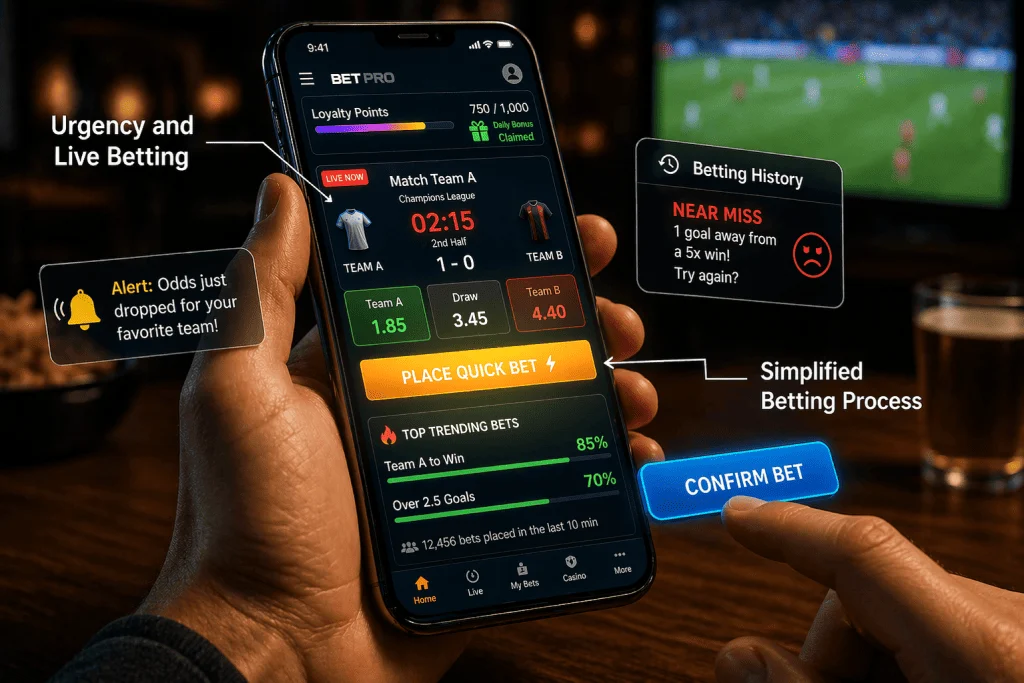
If you spend even a little time reading sports betting news, you’ll notice something interesting. People usually talk about odds, strategies, or results, but very rarely about design. And yet, the way an app looks and feels can quietly shape almost every decision you make.
Modern online betting platforms are not just tools. They are carefully designed environments where colors, buttons, timing, and even tiny animations can influence behavior. You might think you are making fully rational choices, but the interface often nudges you in specific directions without you even noticing.
This doesn’t mean something shady is always happening. But it does mean one thing: if you understand how design works, you start seeing patterns. And suddenly, many betting tips are not just about odds anymore, they are about awareness.
Understanding UI/UX Design in Betting Applications
Before going deeper, it helps to understand what UI and UX actually mean in this context. These are not just technical words, they describe how you experience the app from the first tap to the final bet.
Once you notice these elements, you start to see how small details can guide your attention and influence your decisions in subtle ways.
What Is UI and Why Does It Matter in Betting Apps?
UI stands for user interface. It is everything you see: buttons, colors, menus, and layouts. UX is the experience behind it, how easy or fast it feels to use the app.
In an online sportsbook, UI plays a big role in how you interact with betting odds. Some markets are highlighted more than others. Some buttons are bigger, brighter, or easier to reach.
That is not random. Design helps guide your focus. And often, what you notice first is what you are more likely to click.
Key Design Elements That Influence Behavior
There are a few design elements that show up almost everywhere. Color is one of the strongest. Bright colors often highlight “special” offers or popular bets.
In sports betting, especially in football betting, you will often see odds or markets framed in a way that makes them stand out more than others on betting sites.
Size and placement also matter. A large, centered button feels easier and more natural to press. Add a quick animation after clicking, and the action feels smooth and rewarding, which increases the chance you will do it again.
Common UI Patterns That Shape Betting Decisions
Once you start paying attention, certain patterns appear again and again. These are not accidental, they are tested and optimized over time.
They are designed to make actions faster, easier, and more frequent.
Visual Hierarchy and Attention Guidance
Visual hierarchy means showing some things more clearly than others. Designers use contrast, spacing, and font size to guide your eyes.
In online betting, this often means that specific football odds or promotions are more visible than others. Even if all options are technically available, your attention is directed in a certain way.
Combined with familiar betting tips, this can make certain choices feel more obvious or more “correct,” even if they are not objectively better.
Friction Reduction and One-Click Betting
Friction means effort. The less effort required, the more likely you are to act. That is why many apps focus on reducing steps between decision and action.
In live betting, this is especially noticeable. You can place a bet in just one or two clicks, without much time to think.
This is great for convenience, but it also reduces the pause that normally helps you reflect. Faster decisions feel easier, but they are often less thoughtful.
Psychological Principles Behind UI Design
Design does not just guide your eyes, it works directly with your psychology. Many features are built around well-known behavioral triggers.
Once you recognize them, they become much easier to manage.
Scarcity, Urgency and FOMO Triggers
Scarcity and urgency are powerful motivators. When something feels limited, it feels more valuable.
On best betting sites, you will often see countdown timers or labels like “limited offer.” According to betting industry news, these triggers increase engagement because they push players to act quickly.
The fear of missing out, or FOMO, makes you feel like waiting is a mistake. So you act faster, often without full analysis.
Social Proof and Personalization Cues
People like to follow what others are doing. That is why social proof works so well.
In sports betting news, you may notice features like “most popular bets” or “trending markets.” These are not just informational, they influence perception.
Combined with personalization in betting apps, where the system shows you “recommended” options, this creates a feeling that certain choices are smarter or safer than others.
Impact on Player Behavior and Decision Quality
All these design elements come together and shape how decisions are made. The result is usually faster interaction, but not always better decisions.
Understanding this trade-off is important if you want to stay in control.
Faster Decisions vs. More Thoughtful Choices
Simplified design makes betting quick and smooth. But speed often replaces analysis.
When comparing betting lines or evaluating sports betting odds, players may skip deeper thinking because the interface encourages fast action.
This does not mean every quick decision is bad. But over time, less thinking usually leads to lower-quality choices.
The Role of Notifications and Push Messages
Notifications are one of the most powerful tools in any app. They bring you back, even when you were not planning to return.
In football betting, alerts about changing odds or upcoming matches feel helpful. Combined with familiar betting tips, they create a sense of urgency.
The result is more frequent engagement. You open the app more often, and each visit increases the chance of placing another bet.
Operator Perspectives and Business Goals
From the operator’s side, design is not just about looks. It is directly connected to performance, engagement, and revenue.
Every small detail is tested and improved over time.
Conversion Optimization and User Retention
The goal is simple: make it easy to start and easy to continue.
On platforms like coral betting, smooth onboarding and clear layouts help users move quickly from registration to placing their first bet. In online betting, retention is just as important as acquisition.
Design keeps players engaged, encourages repeat visits, and builds habits over time.
A/B Testing and Data-Driven Design Iterations
Nothing is left to guesswork. Operators constantly test different versions of the same feature.
In online betting, A/B testing is used to compare layouts, button colors, or wording. According to latest online betting updates, even small changes can significantly affect user behavior.
The version that performs better becomes the new standard. This process never really stops.
Recognizing Manipulative Design Patterns
Not all design is neutral. Some patterns are more aggressive and can push users toward actions they did not fully plan.
Learning to recognize them is a key skill.
Dark Patterns and Ethical Concerns in Betting UI
Dark patterns are design choices that make certain actions easier and others harder.
On some betting sites, it may be easier to place a bet than to find account limits or settings. Reports in uk betting news often highlight these concerns.
Examples include hidden conditions, confusing layouts, or pop-ups that push you toward quick decisions without full clarity.
Questions to Ask When Evaluating a Betting App
A simple way to stay aware is to ask a few questions.
In online betting, check if it is easy to find important information. In sports betting, see if you can quickly access limits, history, and settings.
If something feels too fast or too smooth, it is worth slowing down and taking a closer look.
Regulatory and Responsible Design Considerations
As awareness grows, regulators are starting to pay more attention to design practices. The goal is to balance innovation with player protection.
This area is evolving quickly.
Transparency Requirements and Consumer Protection
Regulators are focusing on clarity. Players should understand what they are doing and what the risks are.
In betting regulation news and uk betting news, there is increasing discussion about making interfaces more transparent. This includes clearer terms, visible limits, and fair presentation of options.
These changes aim to protect users without removing flexibility.
Best Practices for Ethical Betting App Design
Ethical design is not about removing features. It is about using them responsibly.
In betting platforms, this means avoiding aggressive triggers and providing easy access to control tools. Many insights from sports betting news suggest that transparent design builds long-term trust.
A balanced approach benefits both players and operators.
Strategies for Conscious Interaction with Betting Apps
Even with all these design elements, players still have control. The key is to use the app intentionally, not reactively.
Small habits can make a big difference.
Setting Personal Boundaries Before Opening the App
Before starting a session, set limits. Decide how much time and money you are comfortable using.
In online betting, combining this with simple betting tips like planning your session in advance helps reduce impulsive behavior. Even on popular betting sites, boundaries create structure.
This turns betting into a controlled activity instead of a reactive one.
Using App Features for Self-Control and Tracking
Most apps already include helpful tools, but many players ignore them.
In sports betting, tracking history and results gives you a clearer picture of your behavior. In general betting, features like reminders or limits are there for a reason.
Using them regularly creates awareness, and awareness is what keeps decisions balanced.
Future Outlook for Betting App Design
Design will continue evolving, and technology will make it even more personalized and adaptive.
This brings both opportunities and challenges.
AI, Personalization and Adaptive Interfaces
AI can analyze behavior and adjust the interface in real time. On an online sportsbook, this could mean showing different betting odds or markets based on your habits.
According to sports betting news updates, personalization is becoming more advanced every year.
But there is also a risk. Too much personalization can increase influence, making it harder to stay objective.
Regulatory Evolution and Design Standards
Regulators are likely to respond with clearer standards.
In sports betting news and betting news today, there is ongoing discussion about setting rules for interface design, especially around transparency and user control.
The goal is not to limit innovation, but to make sure users understand what is happening and can make informed decisions.
FAQ: UI Design and Betting Decision-Making
How can betting app design influence my decisions?
Through layout, colors, and timing, it can guide attention and speed up actions.
What are common UI tricks used in betting apps?
Visual highlights, quick betting buttons, and urgency signals.
How can I recognize manipulative design patterns?
Look for hidden information, pressure to act fast, or difficulty accessing settings.
Are there regulations for betting app design?
Yes, and they are becoming stricter over time.
Can I customize my app experience?
Most apps allow notification and limit settings.
Do simple interfaces increase risk?
They can, because they reduce thinking time.
Will ethical design become standard?
Very likely, as both regulators and users demand more transparency.