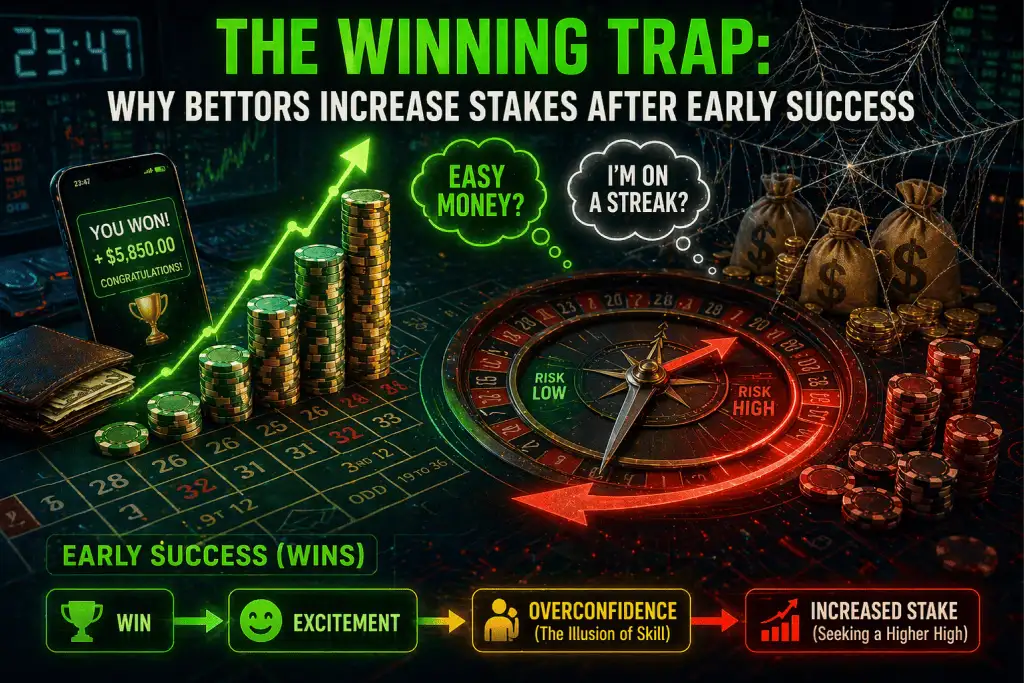
If you read sports betting news, you’ll see this pattern again and again. A player starts strong, hits a few early wins, and suddenly everything feels easy. Confidence goes up, decisions feel sharper, and the idea of increasing stakes starts to look completely logical.
But here is the twist. That early success often becomes the beginning of a problem, not proof of skill. In betting, the moment you feel “in control” is often the moment risk quietly increases, and not in a way that feels obvious right away.
This is what many call the winning trap. It feels positive, exciting, and even justified, but in reality, it can slowly push players into decisions that damage their bankroll over time. The tricky part is that it does not feel like a mistake when it starts. It feels like progress.
Understanding the Psychology of Early Wins
Early wins are powerful, not just financially but emotionally. They change how you feel, how you think, and how you evaluate risk in situations that looked very different just a few bets ago. Even small wins can create a strong internal shift.
To really understand why players increase stakes, we need to look at what happens inside the brain and how quickly emotions can take the lead over logic.
The Dopamine Effect and Reinforcement Loops
When you win, your brain releases dopamine. This is the same chemical linked to reward and motivation. It creates a feeling of satisfaction and pushes you to repeat the behavior, almost automatically.
On best betting sites, this effect can feel even stronger because results are instant and feedback is immediate. According to trends in online betting news, quick wins create fast reinforcement loops that are much stronger than delayed rewards.
You start to associate betting with success. Even if the sample size is small, your brain treats it like a pattern worth repeating. That is why increasing stakes can feel like a natural next step, not a risky one.
Cognitive Biases: Hot Hand Fallacy and Illusion of Control
After a few wins, many players begin to believe they are “on a streak.” This is known as the hot hand fallacy, and it is very common in betting environments.
In sports betting, especially when watching changing football odds, it is easy to feel like you have momentum. You might think you see patterns that others miss or believe your timing is better than average.
At the same time, the illusion of control kicks in. Players start believing their skill is driving results, even in situations where randomness plays a big role. This combination of confidence and bias creates the perfect setup for increasing stakes without fully realizing the risk.
Why Players Increase Stakes After Winning
The psychological effects of early success naturally lead to behavioral changes. Increasing stakes is one of the most common reactions, and it often happens faster than players expect.
This section explains why that shift happens so quickly and why it feels so reasonable in the moment.
Confidence Inflation and Overestimation of Skill
Winning builds confidence, but sometimes too much. Players begin to trust their instincts more than their process, even if that process was the reason they succeeded in the first place.
In football betting, this can lead to bigger bets based on limited analysis. Even basic betting tips start to feel like strong signals rather than just guidance.
According to patterns seen in sports betting news, many players shift from cautious to aggressive strategies after just a few wins. The belief in personal skill grows faster than actual long-term results, and that gap can become expensive.
The “House Money” Effect and Risk Perception
Another key factor is how players mentally separate money. Winnings often feel different from personal funds, even though they are part of the same bankroll.
During in-play betting, players may treat profits as “extra” money that is safe to risk. On many betting sites, this leads to larger and riskier bets without much hesitation.
Because the money feels less valuable, risk perception drops. Players become more willing to gamble aggressively, even if the logic behind the bet is weak. This is one of the most subtle but powerful drivers of the winning trap.
Mathematical Reality: Why Chasing Wins Often Fails
While emotions push players to increase stakes, mathematics tells a very different story. Betting outcomes are influenced by probability, not momentum or confidence.
Understanding this difference is critical if you want to stay consistent over time.
Variance, Expected Value and Long-Term Results
In betting, variance explains why short-term results can look very different from long-term expectations. A few wins do not mean a strategy is profitable, and a few losses do not mean it is bad.
On any online sportsbook, odds are designed to include a margin. Even when using smart betting lines, the expected value does not change just because you are winning more often in the short term.
In sports betting, increasing stakes after success does not improve your edge. It only increases exposure to risk, and that risk can show up very quickly when variance shifts.
Bankroll Erosion and the Risk of Ruin
The biggest danger comes from scaling stakes too quickly. A single losing streak can erase multiple wins, especially if bets become larger over time.
In online betting, this often happens when players feel confident and start risking larger portions of their bankroll. The emotional high from winning makes losses feel less likely, even though mathematically they are always part of the process.
Without structure, even a strong start can lead to rapid bankroll decline. The risk of ruin increases not because of bad luck alone, but because of how stakes are managed.
Recognizing the Warning Signs
The winning trap does not happen instantly. It develops through small behavioral changes that are easy to ignore or justify in the moment.
Recognizing these signals early can help prevent bigger problems later.
Behavioral Red Flags of Problematic Escalation
One of the first signs is impulsive decision-making. Bets become larger, faster, and less structured than before.
Players may rely more on instinct than on analysis, even when following betting tips. In online betting, this often shows up as more frequent bets with less preparation.
Another warning sign is emotional reaction. Wins feel exciting, but losses start to feel frustrating or personal. This emotional shift can push players into chasing behavior without realizing it.
The Role of Bonuses and Promotional Triggers
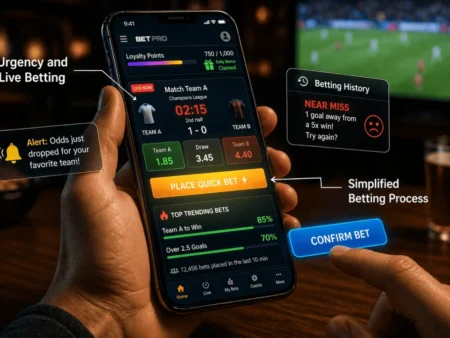
Bonuses can amplify these behaviors more than people expect. Promotions like free bets encourage players to stay active and continue betting even after wins.
Some strategies like matched betting are designed to reduce risk, but in practice, many players use bonuses as a reason to increase stakes.
Limited-time offers create urgency, which reduces careful thinking. Combined with early wins, this can push players into faster and riskier decisions that feel justified in the moment.
Strategies for Sustainable Betting Behavior
Avoiding the winning trap requires structure and discipline. It is not about avoiding betting, but about managing it in a way that keeps emotions under control.
This section focuses on practical ways to stay consistent and protect your bankroll.
Pre-Defined Staking Plans and Discipline
A clear staking plan is one of the most effective tools. This means deciding in advance how much to bet, regardless of recent results.
In sports betting, many players use a fixed percentage of their bankroll for each bet. This keeps risk consistent and prevents emotional decisions after wins or losses.
Even in football betting, where games feel dynamic and exciting, sticking to a plan creates stability. It removes the need to make decisions in the heat of the moment.
Tracking Performance and Separating Skill from Luck
Keeping a record of bets helps create clarity over time. It allows players to see patterns that are not obvious in the moment.
On best betting sites, tracking performance shows whether success is based on skill or short-term variance. Platforms like coral betting often provide tools that make this easier.
This separation between luck and skill is essential. Without it, players may continue increasing stakes based on confidence that is not supported by real data.
Operator Responsibility and Player Protection
While players are responsible for their behavior, operators also play an important role in shaping the environment.
Modern platforms are starting to include tools and systems that support more responsible betting habits.
Tools for Self-Control and Limit Setting
Many platforms now offer tools to manage activity. These include deposit limits, time reminders, and betting caps that can be set in advance.
In online betting, such features help players stay within safe boundaries. According to betting industry news, more operators are introducing smarter and more personalized alerts.
These tools do not stop betting, but they create small pauses that can make a big difference in decision-making.
Education and Transparency in Responsible Gaming
Education is just as important as tools. Players need to understand how variance, risk, and probability actually work in real situations.
In betting regulation news and uk betting news, there is growing focus on transparency and player awareness as part of responsible gaming strategies.
Clear information helps players recognize patterns like the winning trap early, before they turn into bigger problems.
Future Outlook for Behavioral Safeguards
Technology is changing how player behavior is monitored and supported. The next stage of betting platforms will likely include more advanced tools designed to protect users without reducing the experience.
This section explores what may come next.
AI Detection of Risky Betting Patterns
Artificial intelligence can already identify patterns in user behavior. In the future, it may detect when players are increasing stakes too quickly or acting outside their normal habits.
On online sportsbook platforms, this could trigger warnings, suggestions, or even temporary limits. Insights from sports betting news updates suggest that these systems are becoming more common.
This creates a more proactive approach, where problems are identified early instead of after losses happen.
Regulatory Standards for Player Protection Features
Regulators are also becoming more active in this area. There is growing discussion about making certain safety features mandatory across all platforms.
In sports betting news and betting news today, experts often highlight the need for consistent standards that protect players without limiting choice.
These changes could make responsible betting tools a normal part of the experience, not just optional settings that many users ignore.
FAQ: Early Wins and Betting Behavior
Why do bettors increase stakes after early wins?
Because wins boost confidence and reduce perceived risk, making larger bets feel justified.
Is it smart to raise bets after winning?
Usually not, as it increases exposure without improving the underlying odds.
How can I tell if I’m chasing wins emotionally?
If decisions feel fast, impulsive, or based on feeling rather than logic, it is a warning sign.
What strategy helps avoid this trap?
A fixed staking plan and consistent bankroll management.
Do bonuses increase risk?
Yes, they can encourage faster and larger bets, especially after wins.
Can tracking bets help?
Yes, it creates awareness and helps separate real skill from short-term luck.
Do betting sites offer control tools?
Yes, most modern platforms include limits and reminders to support responsible play.
Early wins feel great, and that is exactly why they can be dangerous.
Because when confidence grows faster than discipline, the game quietly starts playing you instead of the other way around.