
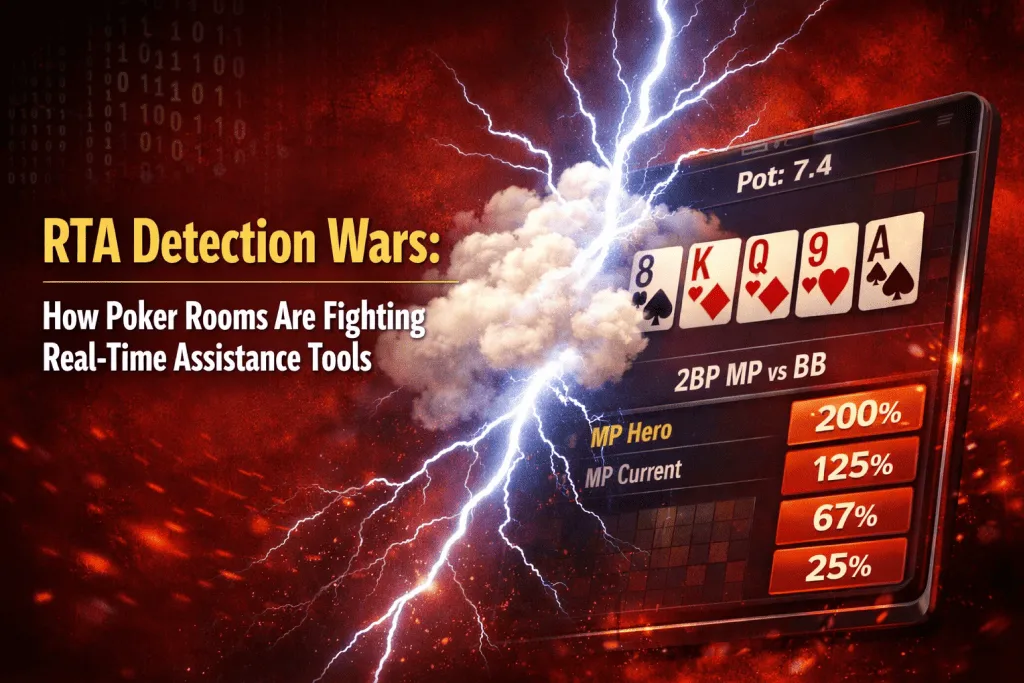
There is a quiet war happening inside online poker right now. You don’t always see it, but it affects every hand, every session, every player. On one side — poker platforms trying to protect fair play. On the other — developers creating real-time assistance tools, also known as RTA.
These tools are designed to give players an unfair advantage. And the problem is growing. According to recent poker news, more platforms are investing heavily in detection systems because the risk is no longer theoretical — it’s real and evolving.
For players, this matters more than it may seem at first. Trust is everything in poker. If the game feels unfair, people leave. So the fight against RTA is not just about rules. It’s about keeping online poker alive and credible.
Let’s break down what’s really going on.
Understanding Real-Time Assistance (RTA) Tools
Before talking about detection, it’s important to understand what RTA actually is and why it’s such a serious issue.
What Is RTA and How Does It Work?
RTA stands for real-time assistance. These are tools that analyze poker hands while you are playing and suggest optimal decisions instantly. Instead of thinking through a situation, a player can rely on software to guide their actions.
In many cases, the tool connects to external servers or uses pre-calculated data to provide near-perfect recommendations. The player still clicks the buttons, but the decision is not really theirs.
At a poker table, this creates a huge imbalance. One player is relying on skill and experience, while another is effectively using advanced software support. That difference changes the nature of the game completely.
Types of RTA: From Solvers to AI Assistants
Not all RTA tools look the same. Some are simple, like preflop charts that guide basic decisions. Others are much more advanced and operate quietly in the background.
Modern tools can analyze patterns, adjust to opponents, and provide suggestions that look very close to optimal play. Some even use AI to simulate complex situations in real time.
According to poker news today, this evolution makes RTA harder to detect than ever. It’s no longer just about spotting obvious cheating. It’s about identifying subtle, consistent advantages that don’t look suspicious at first glance.
Why RTA Detection Has Become Critical
The impact of RTA goes far beyond individual hands. It affects the entire ecosystem.
Impact on Game Integrity and Player Trust
Poker is built on the idea of fair competition. When players believe the game is fair, they are willing to invest time and money. But when that trust is broken, everything starts to fall apart.
If players suspect that others are using unfair tools, they lose confidence in the platform. This can lead to fewer active users, less engagement, and negative reputation across poker industry news and global poker discussions.
Even the perception of cheating can be damaging. Players don’t need proof — doubt alone is enough to push them away.
Economic Consequences for Operators and Professionals
For operators, RTA is not just a fairness issue — it’s a business problem. If recreational players leave, the entire system becomes unstable. Games get tougher, traffic drops, and revenue decreases.
Professional players are also affected. Many rely on consistent environments to maintain profitability. If games feel unfair, they may move to other platforms or stop playing entirely.
As highlighted in poker tournaments news, maintaining a healthy player pool requires trust. Without it, even the most advanced platform struggles to survive.
Detection Methods: How Rooms Catch Cheaters
Poker rooms are not passive in this situation. They are constantly developing new ways to detect and prevent RTA usage.
Behavioral Analysis and Pattern Recognition
One of the most powerful tools is behavioral analysis. Platforms use machine learning to study how players make decisions over time. They look for patterns that don’t match normal human behavior.
For example, unusually consistent decision-making in complex situations can be a red flag. If a player always chooses near-perfect actions across different scenarios, it may indicate the use of external assistance.
By analyzing large volumes of poker hands, systems can identify subtle anomalies that are invisible to the human eye. This approach focuses not on single actions, but on long-term patterns.
Technical Countermeasures: Client-Side Security and Monitoring
In addition to behavior analysis, platforms use technical tools to monitor the player’s environment. This can include scanning for unauthorized software, checking client integrity, and analyzing reaction times.
Modern online poker systems may detect unusual delays or perfectly timed decisions that suggest external input. They also work to block unauthorized access to game data.
These methods are constantly updated, as highlighted in poker news, because the technology on both sides keeps evolving.
Industry Collaboration and Information Sharing
Fighting RTA is not something one platform can do alone. It requires cooperation across the entire industry.
Cross-Platform Blacklists and Data Pools
Many operators now share information about suspicious accounts. This includes creating blacklists and data pools that track known offenders.
If a player is flagged on one platform, that information can be used by others. This reduces the chance of cheaters simply moving between sites.
According to poker news, this kind of collaboration is becoming more common and is seen as a necessary step to protect the ecosystem.
Working with Security Researchers and White-Hat Hackers
Another important strategy is working with external experts. Security researchers and ethical hackers help identify weaknesses before they can be exploited.
Some platforms offer bug bounty programs, rewarding individuals who find vulnerabilities. This creates an additional layer of protection and encourages transparency.
In the world of online poker and global poker, this approach helps build trust with the community and shows that platforms take security seriously.
Challenges in RTA Enforcement
Even with advanced tools, detection is not perfect. There are real challenges that platforms must handle carefully.
False Positives and Player Appeals
One of the biggest risks is false positives. Sometimes, strong players naturally make optimal decisions. If detection systems are too aggressive, they may flag honest players.
To prevent this, platforms need clear review processes and fair appeal systems. Players must have the opportunity to explain their actions and defend themselves.
Balancing strict enforcement with fairness is not easy, but it’s essential for maintaining trust in online poker.
The Cat-and-Mouse Game with Developers
RTA detection is an ongoing battle. As soon as platforms improve their systems, developers of cheating tools adapt. New methods appear, often designed specifically to avoid detection.
This creates a constant cycle of innovation on both sides. Platforms must invest in research, updates, and new technologies to stay ahead.
According to poker industry news, this “cat-and-mouse” dynamic is one of the defining challenges of modern online poker.
What This Means for Players
For regular players, this situation can feel a bit worrying — but there are also ways to stay safe and confident.
How to Protect Your Account and Report Suspicion
Players should always use secure devices, avoid suspicious software, and keep their accounts protected. Being careful with logins and downloads reduces the risk of security issues.
If something feels off at a poker table, it’s important to report it through official support channels. Platforms rely on player feedback to identify potential problems.
Clear communication between players and operators helps improve overall safety.
Playing Fair in an Era of Advanced Tools
Even with all these technologies, one thing stays the same — skill matters. Honest play builds long-term success, reputation, and confidence.
Using unfair tools might offer short-term benefits, but it comes with serious risks, including bans and loss of funds. More importantly, it damages the experience for everyone.
Players who focus on learning, improving, and enjoying the game will always have a stronger foundation, especially in poker tournaments and competitive environments.
Future Outlook for Poker Security
The fight against RTA is far from over. In fact, it’s just entering a new phase.
AI vs. AI: The Next Generation of Detection
The future of detection will rely heavily on artificial intelligence. Advanced systems can analyze behavior in real time, detect anomalies instantly, and adapt to new threats automatically.
Instead of static rules, these systems learn and evolve. They can identify patterns that are too complex for traditional methods.
In online poker and global poker discussions, AI is already seen as the key to maintaining fair play in the long term.
Standardization and Regulatory Involvement
There is also growing interest in industry standards. Regulators and associations may introduce guidelines for anti-cheating systems, transparency, and player protection.
This could include certification of security tools, independent audits, and clearer rules for platforms.
According to poker news, such steps could strengthen trust and create a more stable environment for players and operators alike.
FAQ: RTA Detection and Fair Play in Online Poker
What is RTA in online poker and why is it a problem?
RTA tools provide real-time advice during gameplay, giving players an unfair advantage.
How do poker rooms detect real-time assistance tools?
They use behavioral analysis, technical monitoring, and machine learning to identify suspicious patterns.
Can honest players be mistakenly flagged for using RTA?
Yes, which is why platforms provide review and appeal processes.
What should I do if I suspect an opponent is using RTA?
Report it through the platform’s support system with as much detail as possible.
Are mobile poker apps vulnerable to RTA cheating?
They can be, but platforms are improving security measures across all devices.
Will AI make RTA detection more effective?
Yes, AI is expected to play a major role in future detection systems.
How can I ensure I’m playing at a fair poker site?
Choose well-known platforms with strong reputations and active security measures.